
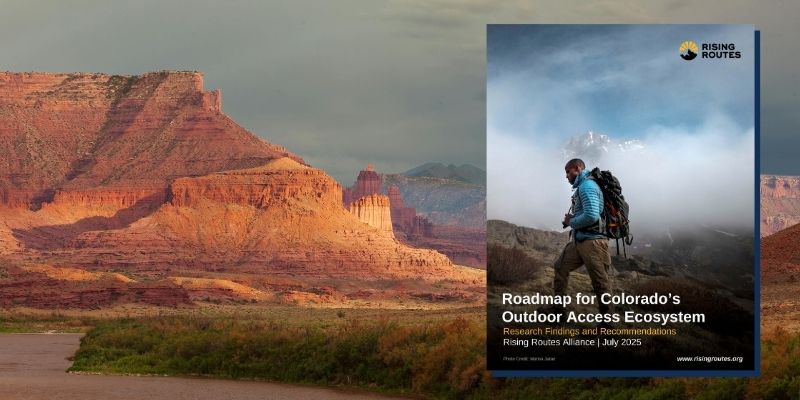
Colorado’s outdoor recreation economy generated $65.5 billion in output in 2023, supporting more than 400,000 jobs across the state.
On paper, the sector looks strong. But beneath that growth, outdoor education and recreation providers across Colorado are navigating unstable funding, workforce shortages, access barriers, and fragmented coordination systems that limit who truly benefits from the outdoors.
Rising Routes set out to answer a critical question: How do we build a more inclusive, coordinated, and resilient outdoor access ecosystem, not just more programs?
What We Found
After surveying 81 organizations statewide from grassroots nonprofits to government agencies, four systemic barriers emerged:
1. Funding Instability
Organizations are heavily reliant on short-term, restricted grants. Smaller and rural providers face the greatest vulnerability.
2. Workforce Gaps
Leadership training and staff retention challenges threaten long-term sustainability across the field.
3. Physical Access Barriers
Transportation, gear access, and infrastructure gaps disproportionately impact historically excluded communities.
4. Fragmented Collaboration
Most strikingly, the ecosystem lacks formal, shared infrastructure. Collaboration is relationship-based, not systems-based, making statewide coordination difficult and inequitable.
Colorado’s outdoor economy is robust. Its coordination infrastructure is not.
Read the Full Report
The full report includes:
-
Detailed research findings
-
Data visualizations and regional breakdowns
-
Policy and funding implications
-
Implementation pathways
-
Early collaborative initiatives already underway
If you care about the future of outdoor access, whether you fund it, design it, deliver it, support it, or participate in it — this report was written for you.
Subscribe below to receive the full Roadmap and future updates.