
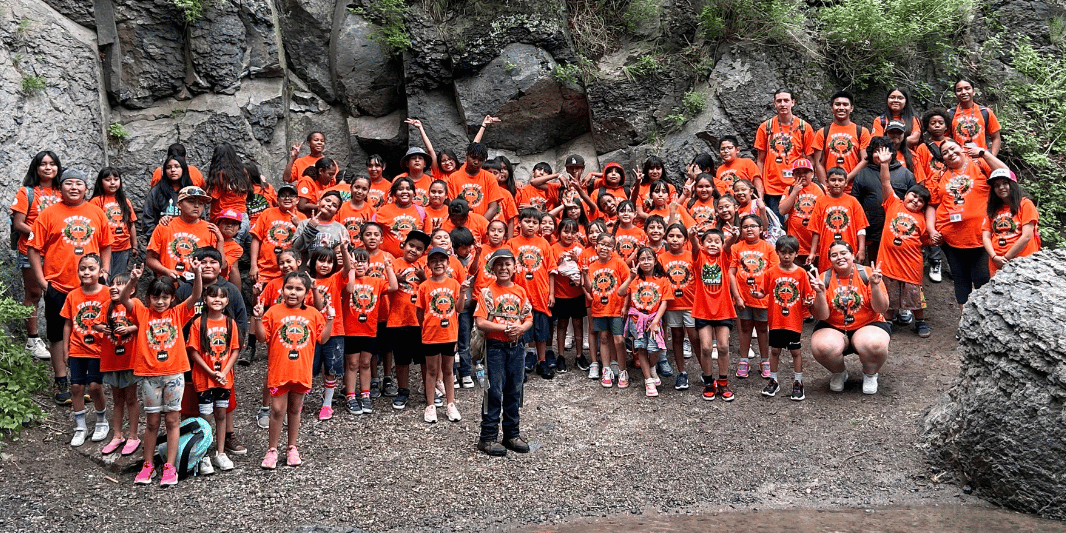
Since 2019, New Mexico’s Outdoor Equity Fund (OEF) has connected more than 128,000 young people to outdoor experiences across 28 counties. Now the program is expanding, and Rising Routes is partnering with The Wilderness Society to conduct the statewide research that will help shape our understanding of how those dollars can make the most impact.
About the New Mexico Outdoor Equity Fund
Seven years ago, New Mexico did something no other state had done before by creating a dedicated, state-funded grant program for youth outdoor access.
Administered by the Outdoor Recreation Division under the state’s Economic Development Department, the fund was built with a specific purpose to reach the young people least likely to experience it: youth in low-income, rural, and underserved communities across the state.
The results so far speak to what sustained, targeted investment can do. Since 2019, the OEF has awarded more than $10.5 million to programs across 28 counties, connecting more than 128,000 young people to outdoor experiences.
This May, the program expanded further, opening up a new funding tier for eligible organizations to apply for grants up to $100,000 (more than doubling the previous cap of $40,000) for large-scale programming. With $4 million available in the upcoming cycle and application windows opening soon, New Mexico is scaling this model.
That’s a meaningful commitment, and it raises a question that every growing fund eventually has to answer: how do you make sure the funds are going where they are needed most?
Using research to shape decisions
This month, Rising Routes is beginning a statewide research collaboration with The Wilderness Society and the New Mexico Outdoor Equity Fund coalition. We’re serving as the social science lead, guiding survey development, co-leading data analysis, and helping coordinate a research process that brings together Tribal leaders, youth programs, community organizations, and state partners.
The work includes building a comprehensive statewide provider database, designing and testing a multilingual survey in English, Spanish, and Navajo, and working through trusted networks to make sure voices from every region are represented. We’ll also support focus groups and interviews to capture what the data alone won’t show.
The findings are targeted for early 2027, in time to inform the legislative session and strengthen how the OEF deploys its funding going forward.
Why this approach works
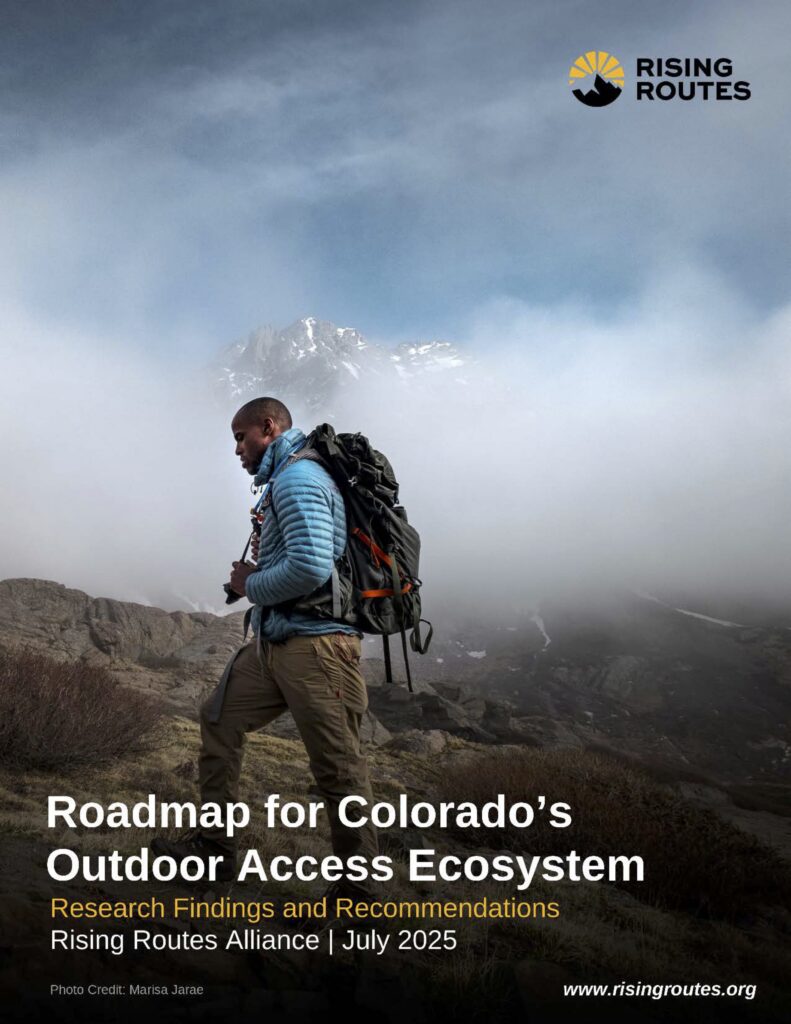
Colorado gave us a blueprint for this kind of work. Our 2025 Roadmap Report assessed 81 Colorado outdoor education and recreation providers and surfaced patterns that no single organization could see on its own.
That research changed how funders and state agencies within Colorado understood the field by making invisible gaps visible and gave decision-makers something concrete to act on when making those critical funding decisions.
New Mexico has the same opportunity, at a critical time while the OEF is still actively scaling. Research findings in 2026 can shape how a growing fund allocates resources for years to come.
What we’re building toward
This project reflects what Rising Routes was built to do. We put evidence at the center of outdoor access systems, so the organizations and funders working to expand access aren’t operating from incomplete information.
When we know who is providing outdoor opportunities across New Mexico, where the coverage is thin, and which investments have created the most durable impact, the OEF and its partners can make decisions with clarity. Providers can see where they fit in a statewide picture. And communities that have previously been left out of the conversation can help lead what comes next.
We’ll share updates from this project as it develops. If you’re a provider in New Mexico and want to be part of the research process, join our provider network or email us at info@risingroutes.org.
The featured image on this page is from Tamaya Wellness Center, a program supported by New Mexico’s Outdoor Equity Fund. Learn more about them.