
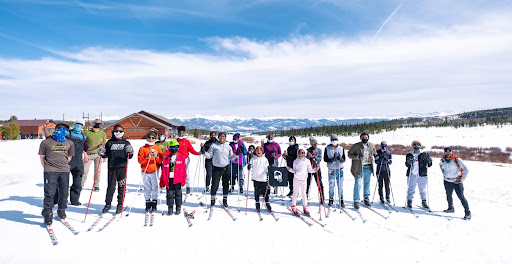
The Colorado Providers of Equitable Access & Knowledge (PEAK) Outdoor Collaborative is a statewide network built to connect community-based outdoor providers to each other and to the policy and funding decisions that shape their work.
On July 27 and 28, Rising Routes convened a two-day strategic planning retreat, facilitated by Keystone Policy Center, to draft PEAK’s definition of outdoor equity, its strategic pillars, and its governance. This fall, we’re taking that draft to outdoor providers across Colorado through community listening sessions.
Why we’re building this now
Colorado’s outdoor policy and funding landscape is shifting quickly. Colorado’s Outdoors Strategy and the Regional Partnership Initiative are moving into implementation, and Proposition 137 has the potential to unlock $175M in statewide investments. Decisions made over the next 18 months will shape outdoor access funding for years, and we believe community-based providers should have a part in shaping them.
Plenty of organizations are already advancing pieces of this work: regional partnerships coordinating locally, statewide organizations advancing funding and policy, and community-based providers running the programs that put people outside. What none of them is positioned to do is connect those providers to one another, translate what they see on the ground into statewide policy priorities, and aggregate the data that funding decisions rest on. That coordinating role is the one PEAK is built for.
A working definition of outdoor equity
The first thing the group did was work on a draft definition of outdoor equity. Colorado’s Outdoor Equity Grant Program already works from a formal definition, built largely around demographic and geographic measures. We worked with our partners from Everyone Outdoors Colorado, Colorado Parks and Wildlife , Great Outdoors Colorado, and the Wilderness Society to tailor a draft definition for PEAK.
The draft we’re bringing to the listening sessions defines outdoor equity as existing when barriers are removed and everyone has the knowledge, choice, opportunity, and shared power to experience and shape the benefits of nature in ways that reflect their own cultures, values, interests, and needs, creating belonging and a shared responsibility for these spaces.
The through line is choice. Outdoor equity is not a matter of taking more people on more hikes. It is about enabling communities to decide for themselves what a meaningful connection to nature looks like – whether that’s a backcountry trip, a neighborhood park, a community garden, a waterway, or a culturally significant place. Our conversations kept circling back to dimensions that a recreation-only frame misses: health outcomes, food security, workforce development, civic participation, disability inclusion, rural perspectives, and experiences that move across generations.
That definition is still in draft form and will be tested during the listening sessions before it becomes the foundation for our policy, programming, and evaluation work.
Three strategic pillars
We collaboratively organized PEAK’s work into three connected pillars.
Shared learning and data. A statewide network for collecting and communicating information about outdoor providers, the communities they serve, funding opportunities, and outcomes. Near-term priorities include a provider inventory and statewide database, a resource and grant library, a communications platform, and a shared approach to metrics. Longer-term, the group discussed statewide outdoor equity indicators and better impact measurements.
Technical assistance and capacity building. Direct support for providers through grant and funding navigation, shared services, training and peer learning, evaluation support, storytelling and impact reporting, and workforce development. We deliberately have not finalized this list, because the listening sessions are where providers tell us what they actually need.
Coordinated policy and advocacy. Rather than reacting to individual bills, PEAK is building a long-term outdoor equity agenda set by its members: a statewide platform shaped through regional listening sessions, coordinated advocacy on the distribution of outdoor funding, and readiness to implement if Proposition 137 passes, including the share directed to the Outdoor Equity Fund. The aim is providers speaking for their own communities in statewide decisions.
A note on the data pillar: technology is meant to support the people doing the work, but it doesn’t substitute for relationships or peer learning. Quantitative data is only part of the complete picture. Data governance, particularly around ownership, privacy, and data sovereignty, will be settled with members rather than handed to them.
How it will be governed
Retreat participants supported Rising Routes serving as PEAK’s backbone organization — handling administration, facilitation, and fiscal management.
Beyond that, the group agreed that the governance structure should stay simple early and evolve rather than be over-designed up front. Membership will prioritize organizations directly serving historically underserved communities, and final governance decisions will belong to PEAK’s members.
How to get involved
In late November and early December, Keystone Policy Center will host a series of listening sessions and virtual focus groups to help shape PEAK’s governance, objectives, policy priorities, and future activities.
We are seeking interest from outdoor education, recreation, conservation, and community-based providers, as well as local governments, school districts, public agencies, Regional Partnerships, policy leaders, and others advancing outdoor equity in Colorado. We especially welcome interest from leaders and organizations representing rural communities, the Front Range, people with disabilities, communities of color, veterans, low-income communities, and others historically underrepresented in outdoor decision-making.
Submit our interest form if you would like to be a part of one of our listening sessions or virtual focus groups. Sessions will be held virtually. Because space will be limited, interest does not guarantee placement; responses will help us assemble groups that reflect a range of geographies, experiences, communities, and perspectives.
Feature photo from event held by Outdoor Afro, YMCA of Rockies, and Jordan Chapel AME Church