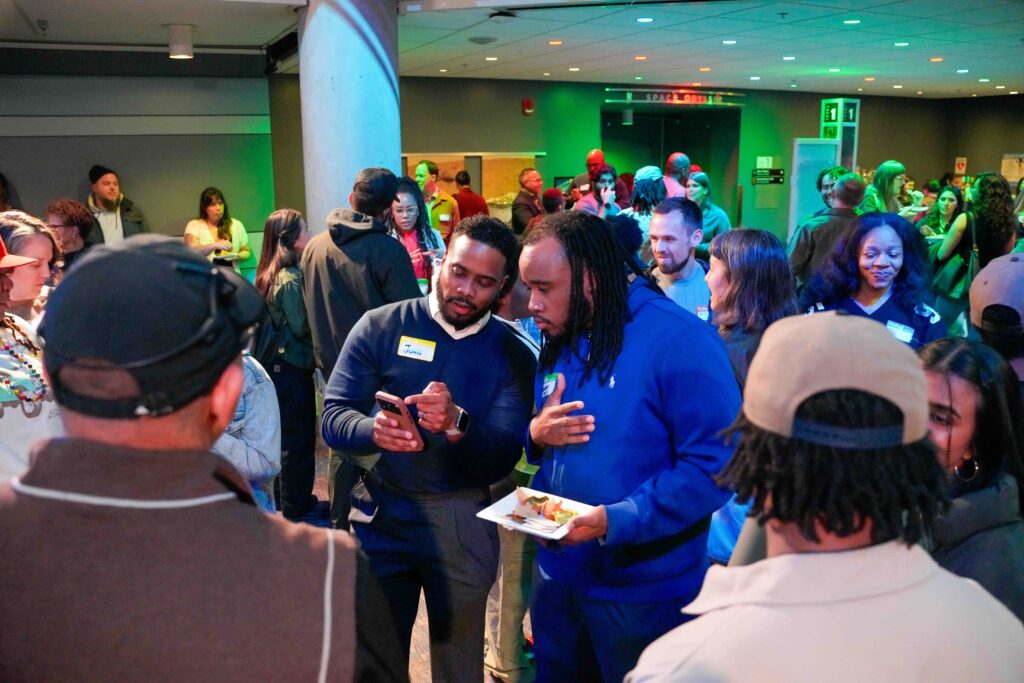

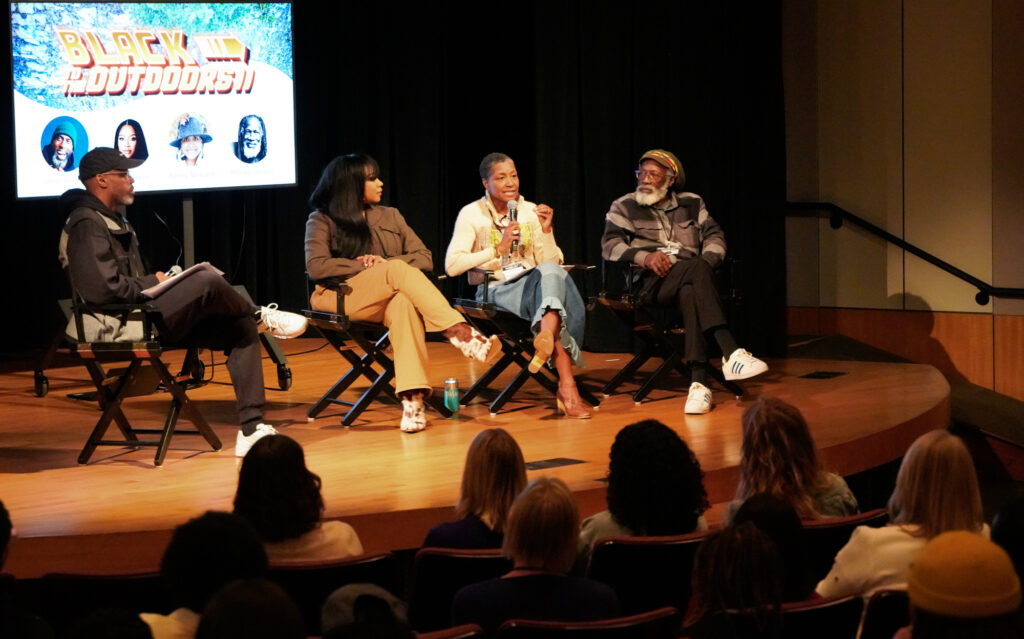
On February 24, Camping to Connect alongside Rising Routes, brought together community members, outdoor professionals, and newcomers for Black to the Outdoors II, an evening of honest conversation about what it takes to expand outdoor access for Black communities in Colorado.
Moderated by Rising Routes founder Jason Swann, the panel featured Phil Henderson (Full Circle Expeditions), Belinda “Benny” Samuels (Imaginable Inc.), and Angel Massie (Wanderland Outdoors). Their message converged around one idea:
The outdoor industry cannot grow more equitable without changing how we work together.
Three takeaways we’re still thinking about:
Nobody should be building alone.
Every panelist named isolation as a main problem. Organizations doing meaningful work in the same communities, sometimes in the same jurisdiction, often have no idea what their neighbors are building. When Angel founded her guiding service, she was surprised to be met with more skepticism than support, even from her own community. The call from the panel was direct: share resources, make introductions, and stop waiting for permission to lift each other up.
The money isn’t flowing where it needs to.
There’s philanthropic support for programs that get kids outside, and that matters. But Benny was blunt about what’s missing: almost no funding reaches Black-led outdoor businesses. She’s a strong fundraiser, and even she has hit walls in Colorado. Her point was that grants alone won’t cut it. Funders need to think about program-related investments, low-interest loans, and structures that treat these businesses as businesses. She also brought up the susu, a rotating savings practice from her Panamanian roots where neighbors pool money to help each other, as a community-oriented way of funding.
Permits are a gatekeeping problem.
If you run a guide service on public land or water in Colorado, you need a permit. Many of those permits stopped accepting new applications years ago – and many of the businesses that hold them today were grandfathered in. If you’re not already in the system, you’re locked out. You can’t plan trips, you can’t build a client base, you can’t grow. Angel and Phil both named this as one of the biggest structural barriers they face. To address this, Angel asked the room to pay attention to who they vote for and what bills are moving through the state legislature that limit access.
So, what can you do today?
If there was one thread that ran through every panelist’s words, it was that the work gets stronger when people stop trying to do it alone. And it starts with a simple question: How can I help?
Think of someone in your community—a provider, a business owner, an organizer—doing meaningful work in outdoor access. Reach out to them today and ask how you can help. Maybe you have a skill they need. Maybe you know someone they should meet. Those small connections are how change can begin.
Join our Provider Network, or contact us to learn more.