
The 2026 Colorado Outdoor Equity Grant Program (OEGP) application is open and due June 2.
Rising Routes has been part of Colorado’s Outdoor Equity Grant Program since before it existed. Here is what we know about the program, how it works, and what tends to make the difference in a strong application.
The program’s history and where it stands today
In 2021, our Executive Director, Jason Swann, was co-chair of the coalition of more than 60+ organizations that helped pass HB 21-1318, creating the Outdoor Equity Grant Program with a $3 million annual allocation. Administered by Colorado Parks and Wildlife and funded by spillover dollars from the Colorado Lottery, the program is an incredible community effort to provide financial support grants of up to $100,000 to nonprofits, schools, for-profit organizations, federally recognized tribes, and local governments working to increase outdoor access for youth and families who are low-income, racially and ethnically diverse, disabled, LGBTQ+, or Indigenous.
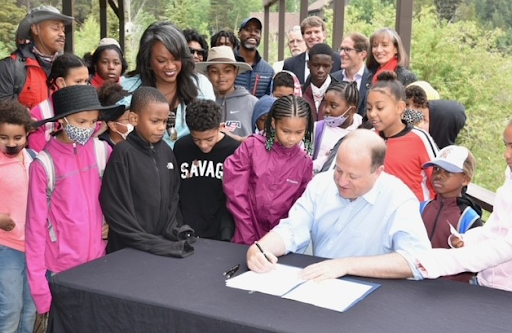
Governor Polis signs HB 21-1318 at the Lincoln Hills Flyfishing Club in Black Hawk, June 21, 2021. Surrounded by youth and families, Polis officially created the Colorado Outdoor Equity Grant Program, which uses Colorado Lottery funds to expand outdoor access for young Coloradans.
Since its inception in 2021, the program has distributed more than $10.5 million, awarded 165 grants, and reached 79,000 youth and families across 56 Colorado counties. The demand for this program has consistently outpaced available funds, and by 2024 that gap was significant enough that Rising Routes helped bring the original coalition back together to address it. That work led to HB 25-1215, passed in 2025, which increased the guaranteed allocation to $4 million annually, and also added an additional 10% of total lottery spillover dollars when certain financial thresholds are met. This is especially significant given new investments in Lottery games and staffing, which should increase future Lottery revenue. However, the need in the field continues to outpace available funding, and the advocacy work continues.
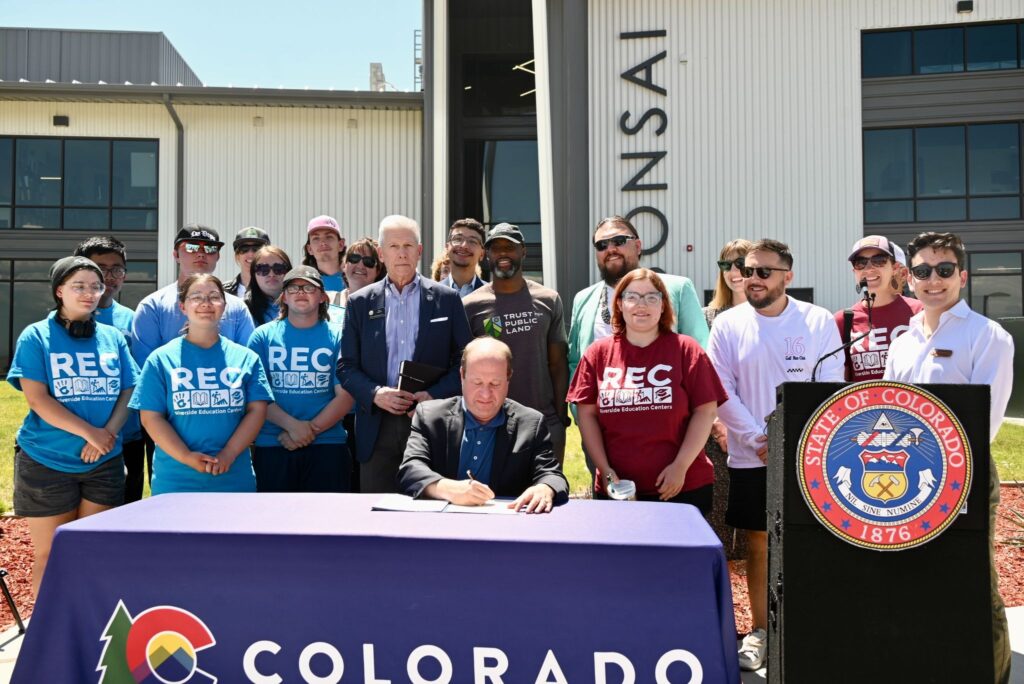
Governor Polis signs HB 25-1215 at Bonsai Designs in Grand Junction, May 30, 2025. The bill redirects Colorado Lottery funds to boost the Outdoor Equity Grant Program, increasing access to the outdoors for underserved youth across the state.
Understanding the application process: tips for Colorado outdoor providers
The OEGP uses a two-step application process. The first step is the Grant Interest Form, open now through June 2, 2026. In 2025, 245 letters of interest were submitted. Of those, 56 advanced to the full application stage, and 24 were ultimately funded. Getting through the first step is itself competitive, so treat the Grant Interest Form seriously.
From there, selected applicants move to a full application, due later this summer. The average award in 2025 was $83,000, not the full $100,000 maximum. Budget accordingly, and make sure every dollar you request is clearly tied to outcomes.
What makes a strong application
This is a competitive grant. In the most recent cycle, only 10% of applicants received funding. That is not a reason to avoid applying — 10 of the 24 awards in 2025 went to first-time awardees — but it is a reason to be strategic about how you apply.
The OEGP board uses a values-based decision-making process. They prioritize proposals that respect the community’s ability to define its own priorities, and that instill a sense of wonder and responsibility for the environment in youth and families. That second value is harder to answer than it sounds. Strong applications do not just describe what participants will do outdoors. Instead, they show how the work disrupts lives for the better.
Here is what that looks like in practice:
Be specific about who you are serving. Broad descriptions tell reviewers very little. Paint a clear picture: are you working with system-impacted youth, foster youth, young people experiencing homelessness, students navigating mental health challenges or neurodivergence, or families in specific neighborhoods or zip codes? Who are the trusted community partners helping connect participants to the program? The more grounded the narrative, the more credible it becomes.
Show how the work sustains the community, not just the program. Sustainability means more than what happens when the funding runs out. Are there environmental, cultural, economic, or community-centered practices embedded in the work that point toward lasting impact beyond the grant period? What sustainability practices are being implemented to support the long-term health, resilience, and well-being of the communities you serve?
Think beyond field-based roles when it comes to workforce development. The outdoor equity field needs program managers, communicators, finance leads, policy advocates, and grant administrators to sustain organizations just as much as it needs guides and instructors. Creating pathways into the administrative and operational side of outdoor organizations is workforce development too, and it is largely absent from most applications.
Show where participants go after the program ends. Is there a pipeline of partner organizations or employers that can connect participants to internships, certifications, employment, or longer-term career pathways? The longevity of the investment’s impact on participant’s lives matters.
If you are an outdoor provider in Colorado and want to explore what collaboration with Rising Routes could offer, reach out. Whether you have applied to the OEGP before, received funding, or are approaching it for the first time, we work with organizations on the structural and technical side of building for long-term sustainability. If you want to help increase what this fund can do for providers across the state, the Colorado Outdoor Access Collaborative is formalizing its year-round advocacy role. Join our provider network to be part of that work.