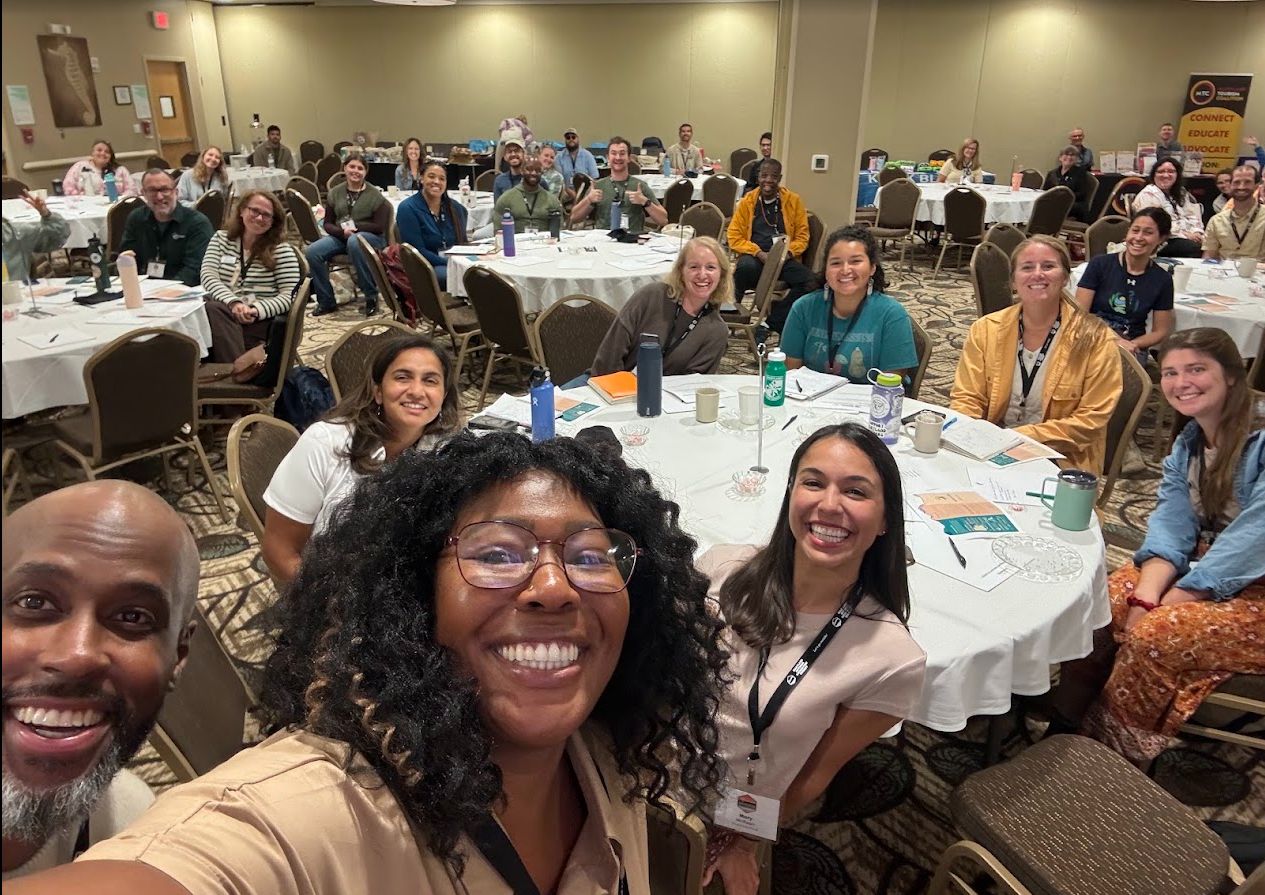
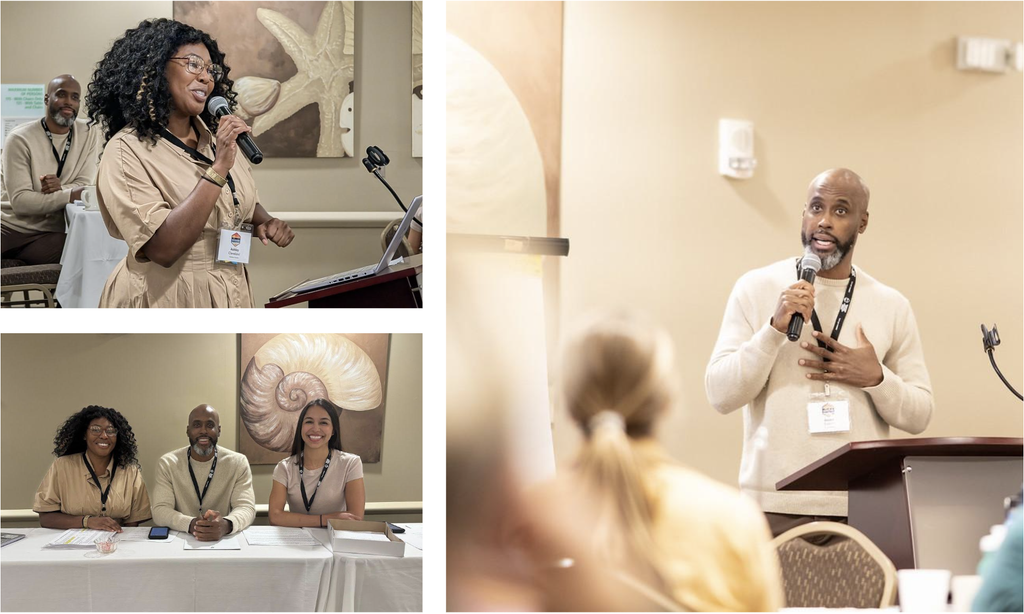
Colorado, New Mexico, Utah, and Maryland are among the U.S. states that have put state dollars toward outdoor access for communities that outdoor recreation has historically left out. On September 30, at the 2026 Maryland Outdoor Recreation Summit, Rising Routes co-founders Jason Swann and Mary McKean joined civic strategist Ashley Cleveland of Cleveland Consulting LLC and Sumi Selvaraj, Environmental Justice Officer at the Maryland Department of Natural Resources, to ask what is needed for that state funding to last.
Their session, “Funding Is Just the Beginning: What Sustainable Outdoor Equity Really Requires,” was built for a mixed room of providers and funders. Smaller providers often approach funding through one grant application at a time. The session made the case for a wider view that includes diverse funding mechanisms and collaborative statewide infrastructure to help one award turn into years of service.
The same funding mechanism in four states
Colorado’s Outdoor Equity Grant Program, New Mexico’s Outdoor Equity Fund, and Utah’s Outdoor Recreation Grant each work a little differently, but they share a premise: a state can set aside dedicated money to reach the communities least likely to get outdoors.
The Maryland Department of Natural Resources’ Outdoor Equity Grants is new and funded through the Great Maryland Outdoors Act of 2022. The grant gave $27,000 to four groups in a 2024 pilot and $65,000 to 11 projects in 2025, with individual awards of up to $7,500. That is a sound start, with room to grow towards Colorado’s current guaranteed $4 million a year.
Three lessons from the field
The session was built around three case studies, each from a different seat in the funding system.
Love Your Block: tell the story with data
Love Your Block, a Johns Hopkins Bloomberg Center for Public Innovation program, works at the municipal to make improvements to neighborhoods. It gives resident-led groups in cities like Baltimore, MD small grants for neighborhood projects, and the cities running it get coaching on civic engagement, impact data, fundraising, and working within city systems. That structure supports cities to fund groups who are less engaged with city hall or unfamiliar with the traditional RFP system. A 2021 Urban Institute study found that relationships cities build between residents and city hall changes city policy and practice.
Love Your Block reports a few plain metrics, such as how many people it has engaged, quantitative impacts, all along a nationwide map of where the work happens. For outdoor providers, goals set with the communities you serve, impact storytelling, and maps of where you engage participants, make a stronger case to funders than standard metrics alone.
Utah: find your people, then widen who can apply
Ashley’s lesson from Utah started with her own experience. As a resident, she was the Utah Network Leader for Outdoor Afro, finding people in her community to hike, kayak, canyoneer, camp, and zipline with real effort, and she volunteered a great deal of her own time building the network from 50 to almost 500 through local business partnerships with Teton Sports, Utah Film Society’s Black, Bold, & Brilliant Program and environmental educators like the Tracy Aviary or Wasatch Mountain Institute.
Utah affinity groups like Color the Wasatch, SLAQC (Salt Lake Area Queer Climbers) or outdoor social impact businesses Color Outside and Our Sundays play a part in increasing the need for Utah’s outdoor recreation grant funding types to grow. She emphasized that the people who share your vision are out there, even when you have to build the group yourself.
This also raises a harder question for funders. A lot of this work still depends on talented people giving their time for free, and a grant funding system that relies on municipal applicants, existing non profit fiscal sponsors will reach fewer communities than ones that staff the programming.
Utah’s Division of Outdoor Recreation, where Ashley served many years on their grant advisory board, has awarded more than $46 million to 267 projects across all 29 Utah counties, according to its latest annual report. Success is measured by county rather than by which communities get funded, though, and eligibility generally stops at governments, Tribal Nations, public institutions, and established nonprofits through physical infrastructure improvements or educational institutions. That can leave many of the state’s affinity groups, from Latino Outdoors SLC to Color the Wasatch, unable to apply on their own.
The session’s suggested fix was to ask communities “What do you want to create?”
Colorado: coordinate statewide
In 2021, Rising Routes Alliance co-led the coalition of more than 60 organizations that passed HB21-1318, creating Colorado’s Outdoor Equity Grant Program. In 202, that coalition reconvened and passed HB25-1215, raising guaranteed funding to $4 million a year plus additional Lottery revenue. Even with that money in place, Rising Routes’ 2025 survey of 81 Colorado organizations found providers still facing unstable funding, gear and transportation barriers, gaps in leadership training, and partnerships too informal to coordinate statewide.
The Providers of Equitable Access & Knowledge (PEAK) Outdoor Collaborative, a statewide coordinating body for outdoor equity now taking shape through listening sessions with Colorado providers, is Rising Routes’ response to those findings.
What Maryland practitioners told us
The session closed by asking the room what would strengthen outdoor equity funding in Maryland. Four themes came up, and the first one built directly on the PEAK model the session had just presented.
1. A trusted statewide collaborative
Several participants said a collaborative like PEAK would help in Maryland. One individual who put a collaborative first on their list, noted that organizations have their own money and resources but are reluctant to share them. Another, a partnerships coordinator, said connecting with partners is the hardest part of the job, stating, “We’re all advocating for the same thing. We don’t have to gatekeep.”
2. Paying for capacity
One small Maryland nonprofit that relies on volunteers recently hired a volunteer coordinator after years of not tracking volunteer input, and the cost was significant. Another participant described an urgent need to get the work done with no funding to do it.
3. Closer funder relationships
A funder said getting the word out about their funding has been hard, and that funders also struggle to explain the limits written into the statutes behind it. As for why they came to the summit: “I’m new to my job, so I come here.” Their ask was for more direct communication and stronger networks between funders and organizations.
4. Help finding and applying for grants
Several participants said many people don’t know how to find grants, how to apply, or how to make sense of the technical side, and that simply knowing where to look would help small and mid-size organizations. They asked for grant support networks and more intentional grant opportunities for underserved populations.
These comments track closely with the fragmented collaboration and funding instability Colorado providers described in Rising Routes’ research.
What we’re building toward
State outdoor equity funds now exist well beyond Colorado, and the push to create and strengthen them reaches as far as Maryland. Rising Routes’ research on New Mexico’s Outdoor Equity Fund and this conversation in Maryland are part of the same work. We want to share what we’ve learned in Colorado with states facing similar questions and bring what they’re learning back to the providers we build alongside here.
The session also opened a conversation among Rising Routes, the Maryland Department of Natural Resources, and Ashley around a question all three share: how to build stronger systems around the people and organizations already creating outdoor access and belonging in Maryland.
Stay in the conversation
If you work in Maryland’s outdoor access ecosystem and want to be part of what comes next, email us at info@risingroutes.org. Providers in Colorado can join our provider network to help shape the PEAK Outdoor Collaborative as it takes form.